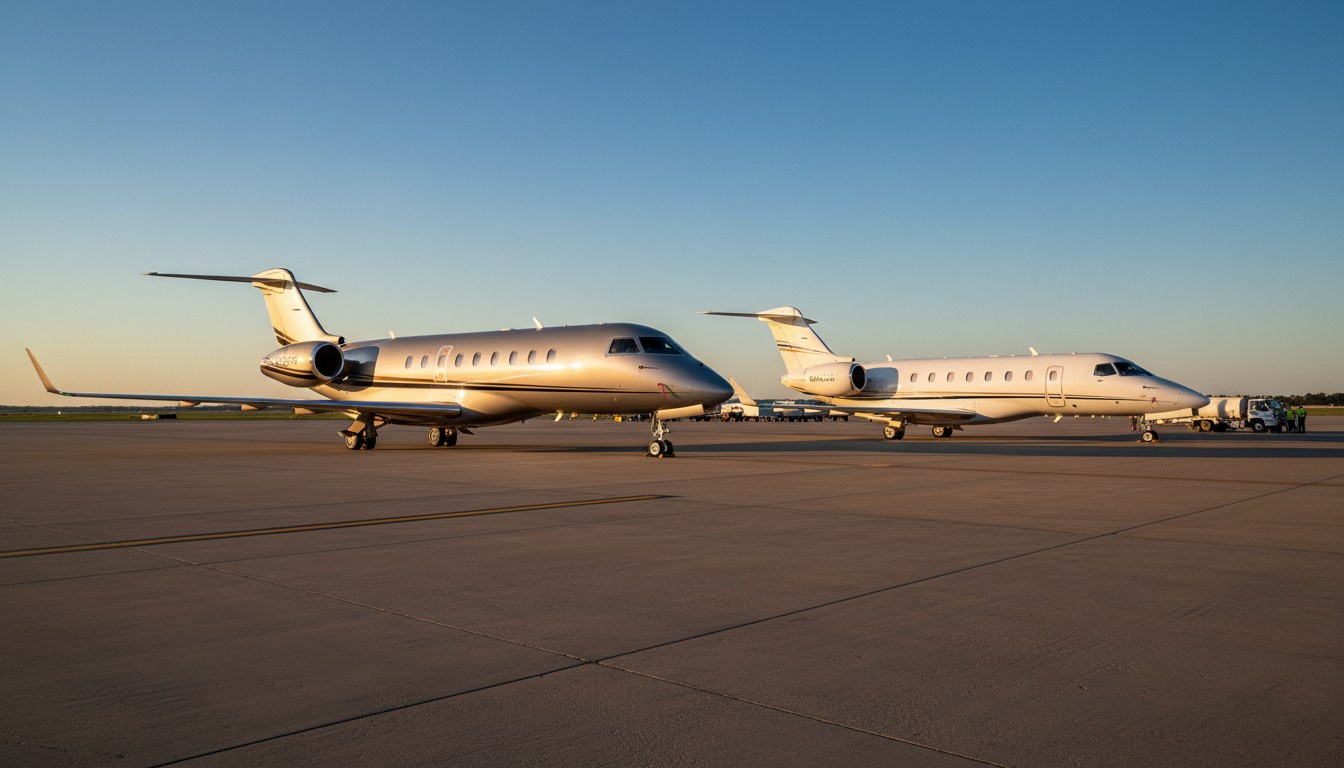
Charter brokers report increasing availability of Embraer Praetor 600 aircraft on routes previously dominated by the Cessna Citation Longitude, as operators respond to client demand for extended range and cabin volume. The Praetor 600's 4,018-nautical-mile maximum range exceeds the Citation Longitude's 3,500-nautical-mile capability by nearly 15%, while offering 14% more cabin volume at 1,058 cubic feet versus 925 cubic feet. This performance gap becomes pronounced on transcontinental routes like New York to Los Angeles, where the Praetor 600 can carry full fuel and passengers without payload restrictions that affect the Citation Longitude on hot days or when operating from high-altitude airports. The competitive dynamic reflects broader shifts in the super-midsize segment, where range and cabin space increasingly drive charter selection over traditional brand preferences. Operators describe payload-range trade-offs as a key differentiator when quoting longer routes, particularly where alternative fuel stops would add significant time and cost to trips.
Why it matters
The super-midsize charter segment represents one of aviation's most competitive markets, with operators choosing between aircraft that often serve similar mission profiles. When performance differences create operational advantages on specific route types, charter availability and pricing can shift meaningfully. The Praetor 600's range advantage translates directly into route flexibility that matters to both operators and passengers on longer missions.
Impact on Charter Market
Charter operators report that the Praetor 600's extended range enables nonstop service on routes where the Citation Longitude requires fuel stops during peak summer temperatures or when departing from airports above 5,000 feet elevation. This operational flexibility allows Praetor 600 operators to quote more competitive total trip times on transcontinental routes, while avoiding fuel stop costs that can add $3,000-5,000 to longer missions. The aircraft's larger cabin also accommodates groups preferring more space during flights exceeding four hours.
Impact on Empty Legs
Extended range capability affects empty leg positioning for operators managing multi-aircraft fleets. Praetor 600 operators can reposition aircraft over longer distances without intermediate stops, potentially creating empty leg opportunities on routes where Citation Longitude operators might require fuel stops. This positioning flexibility can reduce overall empty leg costs and create more direct routing options for empty leg purchasers seeking longer-distance flights at reduced rates.
Key takeaways
• The Praetor 600's 4,018-nautical-mile range exceeds the Citation Longitude's 3,500-nautical-mile capability by 518 nautical miles • Cabin volume advantage of 133 cubic feet (1,058 vs 925) becomes significant on flights over four hours • Payload-range performance creates operational advantages on hot-and-high departures from airports above 5,000 feet • Range differential eliminates fuel stop requirements on some transcontinental routes during summer operations
Expert Opinion
The super-midsize segment has traditionally competed on comfort and brand recognition, but operational performance increasingly drives charter selection. The Praetor 600's range and cabin advantages create measurable value propositions on specific route types, particularly transcontinental flights where fuel stops add time and cost. As charter customers become more sophisticated about aircraft capabilities, pure performance metrics matter more than historical brand preferences in booking decisions.
FAQ
What is the range difference between Praetor 600 and Citation Longitude?
The Embraer Praetor 600 has a maximum range of 4,018 nautical miles compared to the Cessna Citation Longitude's 3,500 nautical miles, providing 518 nautical miles of additional range. This difference enables nonstop flights on routes where the Citation Longitude might require fuel stops.
How do cabin sizes compare between these super-midsize aircraft?
The Praetor 600 offers 1,058 cubic feet of cabin volume versus the Citation Longitude's 925 cubic feet, a difference of 133 cubic feet or approximately 14% more space. This larger cabin becomes particularly valuable on longer flights where passenger comfort matters more.
Which aircraft performs better on hot-and-high departures?
The Praetor 600's superior payload-range performance provides advantages when departing from high-altitude airports during hot weather conditions. Its extended range capability allows full passenger loads without the payload restrictions that can affect the Citation Longitude in these challenging operating conditions.
Sources
References used in this article
- EmbraerPraetor 600 specifications and performance data
- Textron AviationCitation Longitude specifications and cabin dimensions
- Aircraft Comparative AnalysisSuper-midsize aircraft performance comparison