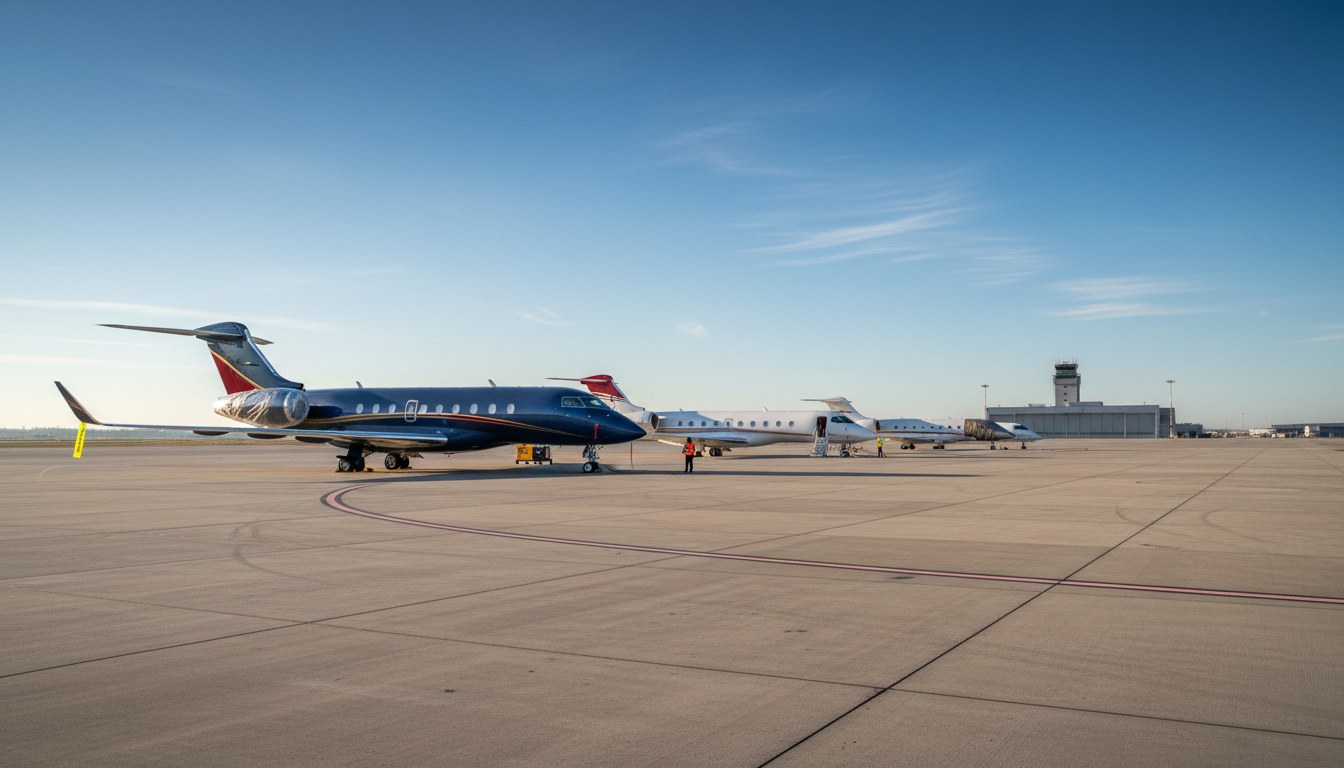
Farnborough International Airshow's static display requirements force charter operators to reposition aircraft to the UK weeks before the event opens, creating a surge of empty-leg availability across European airports as jets deadhead from their operational bases. The airshow's 150+ static display aircraft must arrive at Farnborough Airport (EGLF) according to strict scheduling windows, typically 7-14 days before public opening, with operators coordinating arrivals to avoid congestion at the single-runway facility.
This positioning dynamic extends beyond Farnborough to other major aviation events including NBAA-BACE in Las Vegas and the Paris Air Show, where similar static display commitments require advance repositioning. Charter brokers report that empty-leg inventory increases notably in the weeks surrounding these events, particularly on routes connecting major European business aviation hubs like Geneva (LSGG), Nice (LFMN), and London Luton (EGGW) to Farnborough. The pattern reverses immediately post-show, as aircraft reposition back to their home bases or next charter assignments.
Why it matters
Understanding airshow repositioning patterns allows charter buyers to identify pricing arbitrage opportunities during predictable empty-leg surges. These events create temporary imbalances in regional aircraft positioning that can translate to significant cost savings for flexible travelers. The advance notice of airshow dates—Farnborough occurs biennially in July—provides planning horizon for both operators managing fleet positioning and customers seeking discounted charter options.
Impact on Charter Market
Airshow positioning affects charter pricing across multiple markets simultaneously. Operators face deadhead costs to position aircraft for static displays, creating pressure to offset these expenses through discounted empty-leg sales. Regional charter availability temporarily decreases in show locations as aircraft remain committed to static display schedules, potentially driving up rates for standard charter bookings during show periods. The concentration of high-value aircraft at single locations also influences insurance and operational costs for participating operators.
Impact on Empty Legs
Empty-leg availability follows predictable patterns around major airshows, with inventory surging in the 10-14 days before events as aircraft reposition toward show locations. Post-show periods see similar spikes as aircraft return to operational bases or move to subsequent charter assignments. Routes between major business aviation centers and airshow locations show the highest empty-leg frequency during these windows. Brokers report that positioning flights often offer greater scheduling flexibility than regular empty legs, as operators have more control over departure timing when moving aircraft for displays rather than completing passenger trips.
Key takeaways
• Farnborough's 150+ static display aircraft must arrive 7-14 days before show opening, creating predictable repositioning patterns • Empty-leg inventory increases on European routes to Farnborough Airport during pre-show positioning periods • Similar dynamics occur at NBAA-BACE, Paris Air Show, and other major aviation events requiring advance aircraft positioning • Post-show periods generate return empty legs as aircraft reposition to operational bases • Charter buyers with flexible timing can leverage these predictable positioning cycles for cost savings
Expert Opinion
The airshow positioning phenomenon illustrates how regulatory requirements and industry logistics create temporary market inefficiencies that benefit informed buyers. Static display commitments are non-negotiable for manufacturers and operators seeking visibility at major industry events, making the resulting empty-leg patterns highly predictable. The key insight for charter buyers is recognizing that these positioning requirements operate on fixed timelines tied to published airshow schedules, creating planning opportunities unavailable in typical empty-leg markets where availability depends on unpredictable passenger itinerary changes.
FAQ
How far in advance do aircraft need to arrive at Farnborough for static displays?
Aircraft participating in static displays typically arrive 7-14 days before Farnborough International Airshow opens to the public. This advance positioning allows operators to complete required inspections, coordinate display arrangements, and avoid congestion during the show's setup period at the single-runway facility.
Which routes see the most empty-leg activity during airshow positioning?
Routes connecting major European business aviation hubs like Geneva (LSGG), Nice (LFMN), and London Luton (EGGW) to Farnborough Airport (EGLF) typically show increased empty-leg availability during pre-show positioning periods. Similar patterns occur between US hubs and Las Vegas for NBAA-BACE positioning.
Do empty legs from airshow positioning offer more flexibility than regular empty legs?
Positioning flights for airshow displays often provide greater scheduling flexibility because operators control departure timing when moving aircraft for static displays, unlike empty legs resulting from completed passenger trips where timing depends on previous charter schedules.
Sources
References used in this article
- Farnborough InternationalStatic display requirements and scheduling
- NBAANBAA-BACE exhibitor positioning requirements
- UK CAAFarnborough Airport operational procedures