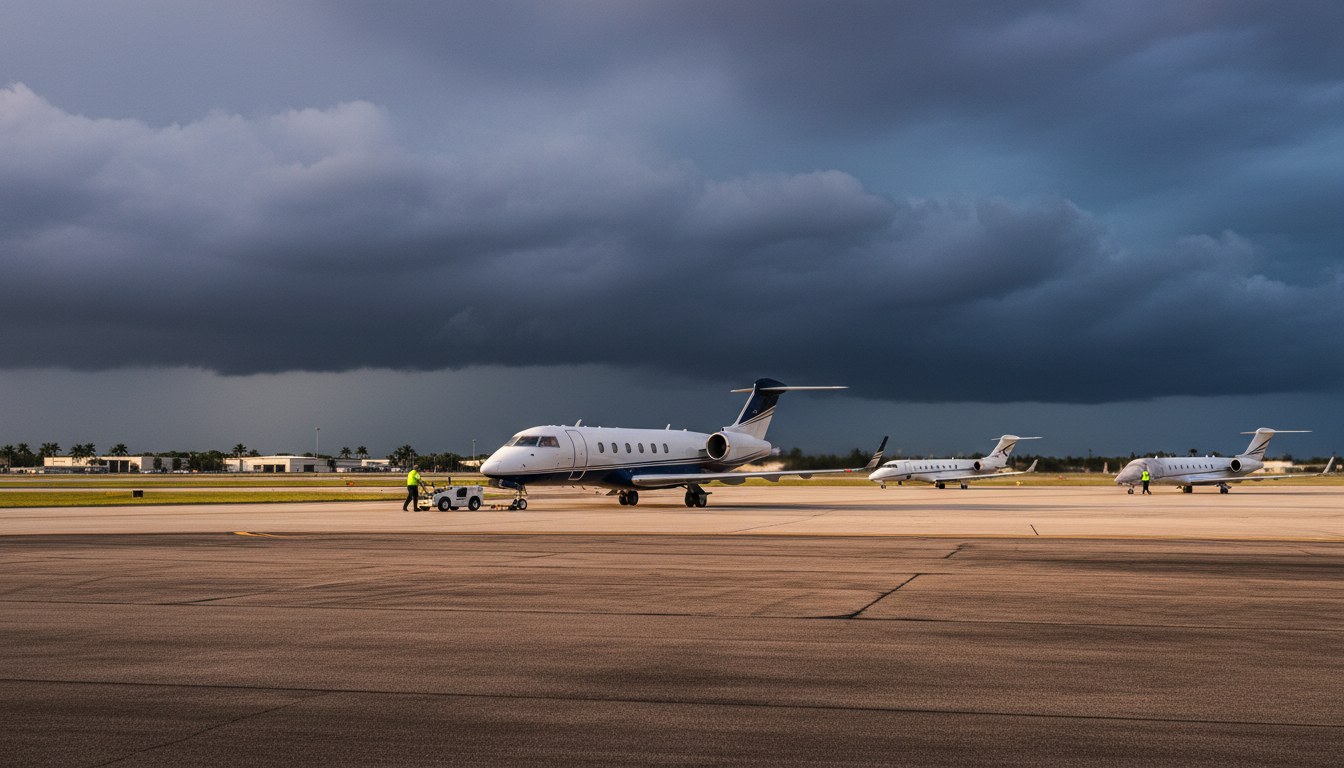
FlightAware tracking data shows westbound aircraft repositioning from Florida and Caribbean bases increases substantially during Atlantic hurricane season, as operators move jets away from storm-threatened airports to safer interior locations. This predictable migration pattern creates concentrated empty leg availability on routes from Miami International (MIA), Fort Lauderdale Executive (FXE), and Nassau Lynden Pindling International (MYNN) to destinations like Atlanta Hartsfield-Jackson (ATL), Dallas Love Field (DAL), and Houston Hobby (HOU).
The repositioning follows established hurricane preparedness protocols that require operators to evacuate aircraft from coastal bases when storms approach within 48-72 hours of landfall. Unlike routine empty legs that result from one-way charter bookings, these weather-driven repositioning flights occur in clusters as multiple operators simultaneously move aircraft from the same threatened region. The National Business Aviation Association's hurricane preparedness guidelines recommend aircraft evacuation when sustained winds of 39 mph or higher are forecast within 72 hours of an airport's location.
Why it matters
Hurricane season repositioning creates temporary supply imbalances that affect both charter pricing and empty leg availability across the southeastern United States. Operators must balance the cost of repositioning aircraft against potential storm damage, while charter customers face reduced aircraft availability at coastal bases during active weather periods. These patterns repeat annually from June through November, making them more predictable than other weather-related disruptions.
Impact on Charter Market
Charter availability contracts sharply at Florida and Caribbean airports during active storm threats, as operators prioritize aircraft safety over revenue opportunities. Customers seeking departures from threatened bases often face premium pricing or must accept positioning fees to bring aircraft from interior locations. Conversely, interior airports like Atlanta and Dallas see temporary increases in available aircraft, though operators typically price these jets for immediate departure rather than extended stays.
Impact on Empty Legs
Westbound empty legs from storm-threatened bases typically price at steeper discounts than routine repositioning flights, as operators prioritize rapid evacuation over revenue optimization. Lead times compress dramatically during active storms, with some empty legs posted just hours before departure as weather forecasts update. Routes from South Florida to Texas and Georgia see the highest concentration of hurricane-season empty legs, reflecting the primary evacuation corridors operators use to move aircraft beyond storm reach.
Key takeaways
• Hurricane preparedness protocols require aircraft evacuation when sustained winds of 39 mph or higher are forecast within 72 hours • Westbound routes from Florida and Caribbean bases to interior U.S. airports see concentrated empty leg availability during storm threats • Weather-driven repositioning creates steeper empty leg discounts than routine one-way charter repositioning • Lead times for hurricane season empty legs compress to hours rather than days as storm forecasts develop
Expert Opinion
Hurricane season repositioning represents one of the most predictable patterns in private aviation, yet it creates genuine pricing opportunities for flexible travelers. The key is understanding that these empty legs operate on compressed timelines driven by weather forecasts rather than passenger convenience. Operators face real costs from aircraft downtime and repositioning, making legitimate discounts available to customers who can accommodate rapid departure schedules and limited destination flexibility.
FAQ
When do operators typically start evacuating aircraft during hurricane season?
Operators begin aircraft evacuation when sustained winds of 39 mph or higher are forecast within 72 hours of an airport's location, following National Business Aviation Association hurricane preparedness guidelines. The evacuation timeline depends on storm intensity and projected path.
Which routes see the most hurricane season empty legs?
Westbound routes from South Florida airports like Miami International (MIA) and Fort Lauderdale Executive (FXE) to interior destinations including Atlanta (ATL), Dallas (DAL), and Houston (HOU) typically generate the highest concentration of storm-related empty leg flights.
How do hurricane season empty leg prices compare to regular repositioning flights?
Hurricane season empty legs often price at steeper discounts than routine repositioning flights because operators prioritize rapid evacuation over revenue optimization, with compressed booking windows that limit their ability to find full-fare passengers.
Sources
References used in this article
- National Business Aviation AssociationHurricane preparedness protocols and evacuation guidelines
- FlightAwareAircraft tracking and repositioning pattern data
- Federal Aviation AdministrationAirport operations and weather-related flight procedures