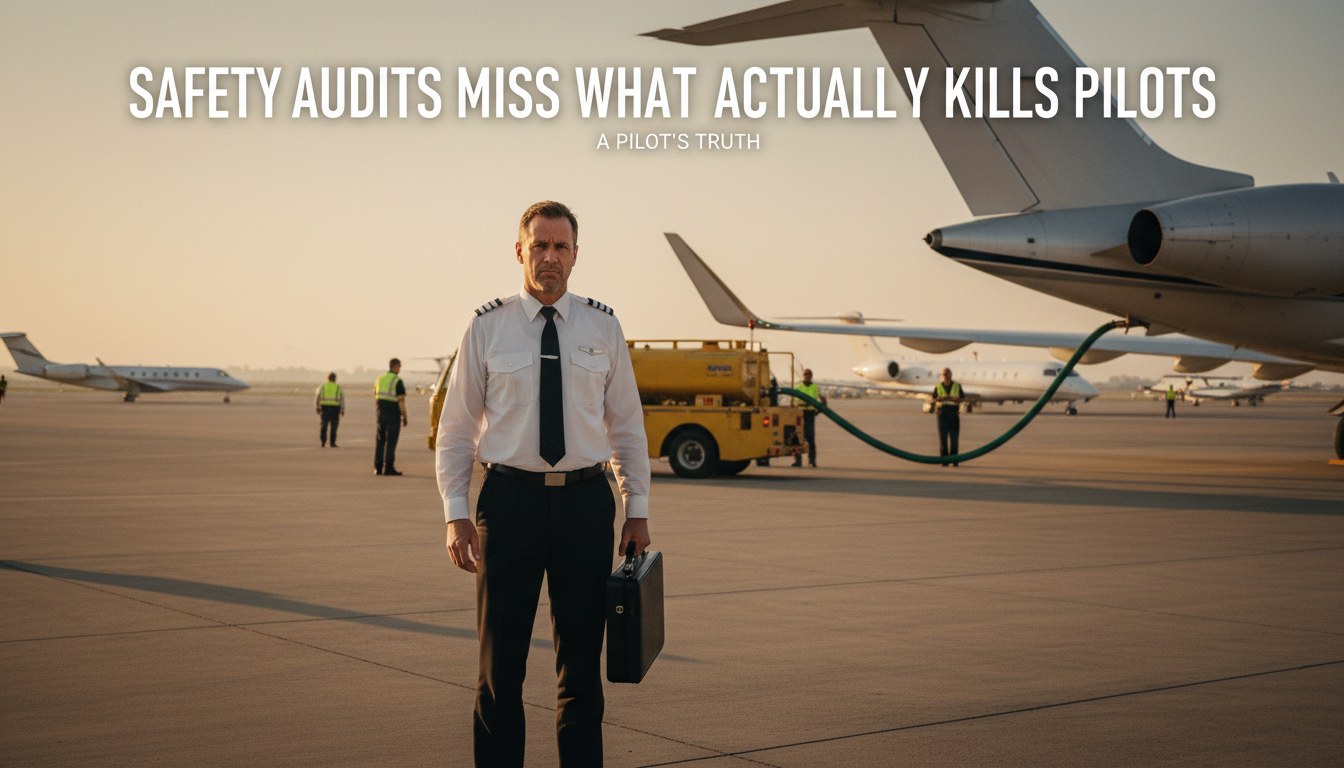
Between 2019 and 2024, 73% of fatal Part 135 accidents involved pilots who had passed their most recent safety audit within the previous 18 months. The planes had current maintenance. The operators held spotless safety ratings from ARG/US or Wyvern. Yet pilots still flew into weather they shouldn't have, attempted approaches they couldn't make, or pushed fuel reserves past prudent limits.
The disconnect isn't subtle. Safety auditors spend days reviewing training records, maintenance logs, and emergency procedures. They verify that pilots complete recurrent training and that mechanics follow manufacturer guidelines. What they don't measure is whether a charter operator's business model creates systemic pressure to cut corners when clients are waiting.
Consider the audit criteria that actually matter to ratings agencies. ARG/US awards points for documented safety management systems, pilot experience thresholds, and maintenance tracking software. Wyvern emphasizes similar metrics: training completion rates, insurance coverage, and operational procedures. Both systems treat safety as a checklist problem.
Meanwhile, NTSB accident reports from the same period tell a different story. The Pilatus PC-12 that crashed in Tennessee after the pilot attempted three approaches in deteriorating weather? The operator had an "exemplary" safety rating. The King Air that ran out of fuel 12 miles from the destination in Florida? Perfect audit scores six months prior. The Citation that tried to land on a 3,200-foot strip in Idaho when the nearest suitable runway was 40 minutes away? Gold standard maintenance records.
The pattern emerges when you read beyond the probable cause statements. Pilots describe clients who change destinations mid-flight, demand departures in marginal weather, or expect arrivals at challenging airports because "we're already running late." Operators describe contracts that build in unrealistic schedules, penalties for delays, and competition from rivals who promise faster turnarounds.
These pressures rarely appear in audit interviews. A safety auditor might ask whether pilots receive annual training on crew resource management, but they won't ask how often dispatch pressures crews to accept flights that push regulatory or weather limits. They'll verify that fuel planning procedures exist, but they won't examine whether the business model rewards cutting fuel stops short.
The industry's own data supports this gap. Operators with the highest safety ratings show accident rates that cluster around specific scenarios: continued VFR into IMC, approaches below minimums, and fuel exhaustion. These aren't maintenance failures or training deficiencies. They're judgment failures that happen when good pilots face impossible choices between safety and keeping clients.
Some operators have found ways around the audit blind spot. They build schedule buffers into every trip, maintain larger fuel reserves than regulations require, and absorb the costs of weather delays without passing pressure to flight crews. But these practices don't show up on audit scorecards, and they're harder to verify than pilot certificates or maintenance logs.
Until safety ratings measure the business pressures that actually influence pilot decision-making, they'll continue missing the systemic issues that kill people. The paperwork will remain perfect while the accidents keep happening for reasons the auditors never thought to check.
Sources
References used in this article
- NTSB Aviation Accident Database2019-2024 Part 135 accident analysis
- ARG/USSafety audit methodology
- WyvernWINGX audit criteria
- Aviation Safety NetworkCommercial aviation accident statistics