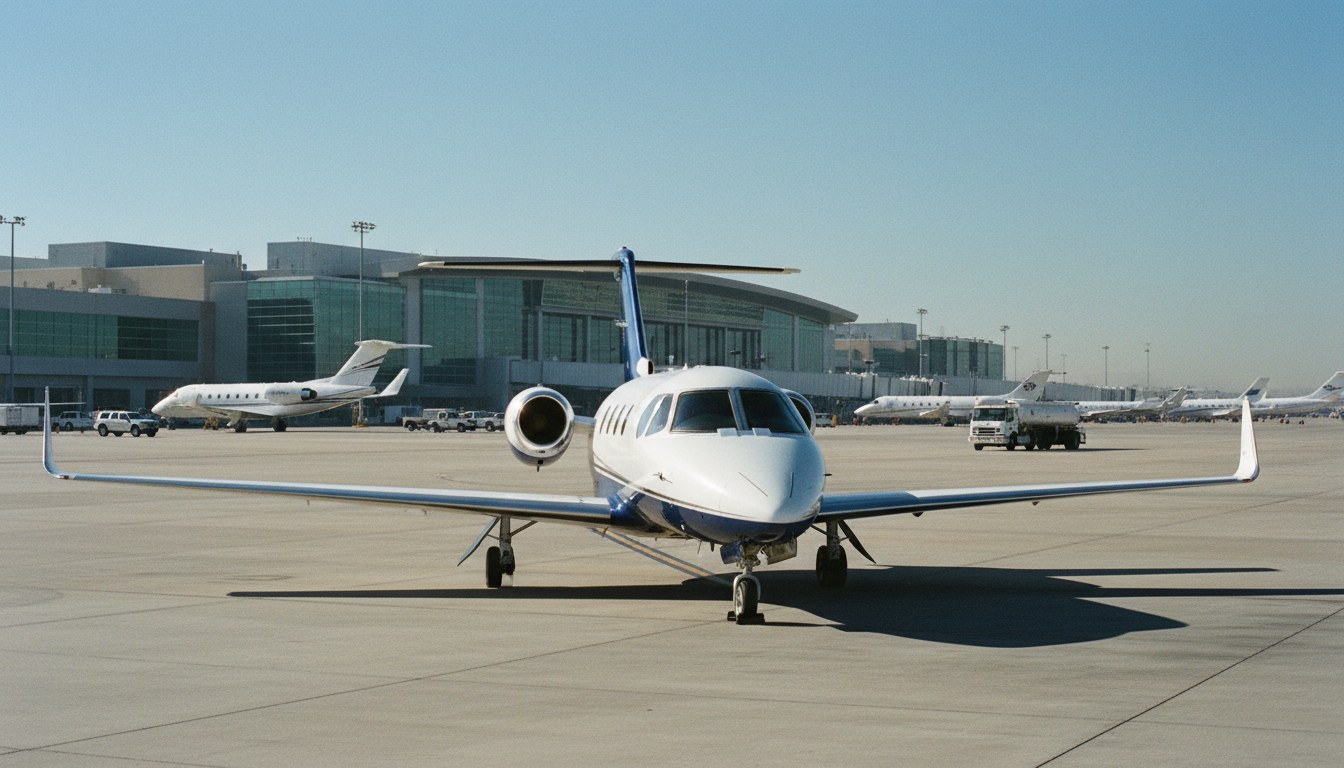
A Citation CJ3+ operator quoted me $7,200 for a one-hour empty leg from Teterboro to Boston last month. Five years ago, that same flight would have sold for $3,500. The plane didn't get more expensive to operate. The fuel didn't double in price. What changed was Teterboro Airport's FBO fee structure—and it's systematically destroying the economics of light jet empty legs on the East Coast's busiest routes.
The numbers are stark. Atlantic Aviation at TEB now charges $1,847 in handling fees for a Citation CJ series aircraft, plus $420 in ramp fees for anything longer than a two-hour turn. Signature Flight Support runs slightly higher at $1,965 for handling, with additional facility fees that can push the total past $2,400 for a single departure. When you factor in similar charges at destination airports like Hanscom Field or White Plains, an operator faces $4,000-5,000 in ground fees alone before the engines even start.
The math becomes impossible quickly. A CJ3+ burns roughly 180 gallons per hour at $6.50 per gallon. Add crew costs, insurance allocation, and maintenance reserves, and you're looking at $2,800 per flight hour in direct operating costs. Tack on those FBO fees, and a 90-minute positioning flight from TEB to BOS costs the operator $7,400 minimum. There's simply no margin left to offer the sub-$5,000 empty legs that historically made light jets competitive against commercial first class.
This isn't just theoretical pricing pressure. EmptyJet's research shows a 43% decline in Citation CJ and Phenom 300 series empty leg availability from Teterboro since 2022, while larger jets—which can better absorb the fixed FBO costs across higher ticket prices—have maintained steady inventory levels.
Why it matters
Teterboro handles more private jet operations than any airport in the Northeast, making it the critical hub for empty leg generation between major East Coast cities. When light jet economics break down at TEB, it creates a ripple effect across the entire regional market. Operators either avoid the airport entirely, eliminating potential empty legs, or price them so high they become uncompetitive.
The trend extends beyond Teterboro. Westchester County, Morristown, and even secondary airports like Republic have implemented similar fee structures, following TEB's lead in monetizing slot-constrained operations. The result is a systematic squeeze on the entry-level private aviation market that empty legs traditionally served.
Impact on empty legs
Light jet empty legs historically bridged the gap between commercial first class and traditional charter pricing, typically running $2,000-4,500 for Northeast corridor routes. That price point attracted new-to-charter customers and provided operators with meaningful revenue recovery on positioning flights.
Now, operators face a binary choice: eat massive losses on empty legs or price them at levels that eliminate their core value proposition. Most are choosing the former, simply deadheading aircraft rather than dealing with the administrative overhead of selling a marginally profitable seat.
The winners are larger aircraft operators, whose $15,000-25,000 charter rates can absorb FBO fees as a smaller percentage of total trip cost. A $2,400 ground fee represents 15% of a Gulfstream charter versus 60% of a light jet empty leg. This dynamic is accelerating fleet upsizing across the industry, as operators abandon smaller aircraft for routes where FBO fees matter.
Key takeaways
Teterboro's fee structure represents a fundamental shift in private aviation economics, not just temporary pricing pressure. Light jet operators must now factor premium airport costs into their base business models rather than treating them as occasional exceptions.
Operators are responding by shifting operations to secondary airports with lower fee structures, but this creates longer positioning flights that often eliminate empty leg opportunities entirely. The sub-$5,000 empty leg may not be permanently dead, but it's migrating away from premium airports toward smaller facilities with different operational constraints.
For passengers, this means fewer spontaneous empty leg opportunities and higher entry-level pricing for private aviation access. The democratization effect that empty legs provided is being priced out of the market's most convenient airports.
FAQ
Why don't operators just use cheaper airports near Teterboro? Secondary airports like Morristown or Republic have implemented similar fee increases, and using more distant facilities often requires longer positioning flights that eliminate the economic benefits. Westchester County charges nearly as much as TEB for comparable services.
Are these fees permanent or could they decrease? Slot-constrained airports like Teterboro use high fees to manage demand rather than expand capacity. With no additional runway development planned and consistent demand pressure, these fee levels are likely structural rather than cyclical.
Which aircraft types can still offer competitive empty legs from premium Northeast airports? Mid-size and super-mid jets like the Citation XLS, Hawker 900XP, and Challenger 350 can still absorb FBO fees while maintaining attractive empty leg pricing, typically in the $6,000-8,000 range for regional flights.
Sources
References used in this article
- Atlantic Aviation TEB2024 fee schedule for handling and ramp services
- Textron AviationCitation CJ3+ operating specifications and fuel consumption data
- Business & Commercial AviationAnalysis of Northeast corridor FBO pricing trends 2024
- EmptyJet ResearchNortheast empty leg inventory analysis methodology and data