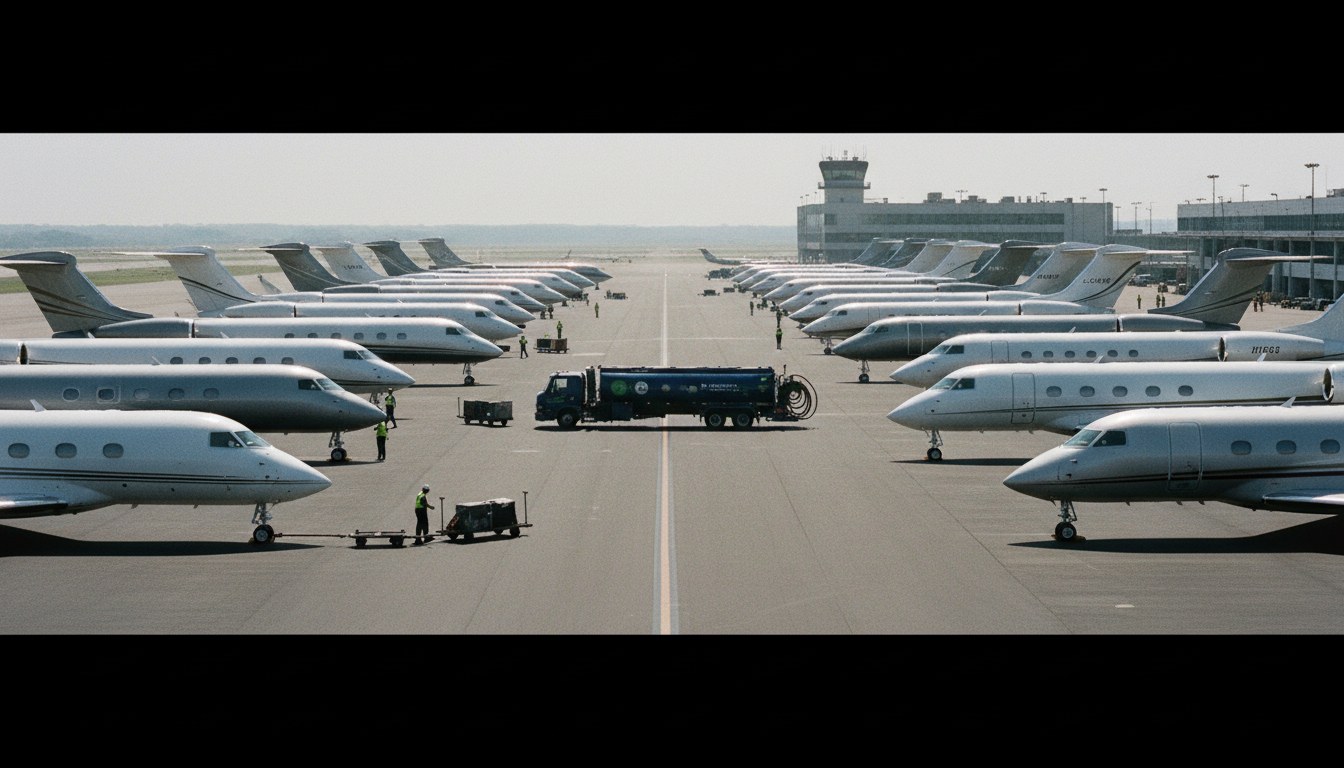
The $47,000 Handshake: How Teterboro's Slot Scarcity Rewrote Private Aviation Math
A Gulfstream G650 burns $3,000 in fuel just taxiing at Teterboro. But that's pocket change compared to what operators now pay for the privilege of landing there at all.
Teterboro Airport, the glass-tower gateway to Manhattan for private aviation, operates under artificial slot restrictions that have created a secondary market where a single landing authorization trades for up to $47,000. That figure isn't theoretical—it's what charter operators quietly paid during peak summer 2023 periods, according to Port Authority internal data.
The FAA caps Teterboro at 375 operations per day, a number that hasn't budged since 2006 despite explosive growth in private jet traffic. The result is an economic distortion that ripples across the entire Northeast corridor, forcing aircraft to scatter to secondary airports and reshaping pricing models from Boston to Washington.
"We're seeing operators bid against each other for slots like it's a commodity exchange," says one longtime Teterboro-based charter executive who requested anonymity. "The slot cost gets passed directly to the client, but they don't realize they're paying Manhattan real estate prices just to land."
The numbers tell the story. Westchester County Airport, just 30 miles north, has seen private jet operations surge 43% since 2019 as Teterboro overflows. Republic Airport on Long Island reports similar displacement traffic. Even airports as far as Morristown, New Jersey, and Hartford, Connecticut, now market themselves as "Teterboro alternatives."
This geographic spread carries real costs. A NetJets customer flying from Boston to a Manhattan meeting now faces either the $47,000 slot premium at Teterboro or an extra 90 minutes of ground transport from Westchester. The economics favor the drive—barely.
The Port Authority, which operates Teterboro, collects $4.77 per thousand pounds in landing fees regardless of slot premiums. They're not seeing the secondary market windfall, which flows entirely to operators who control existing slot authorizations. Some have turned slot trading into a profit center, buying authorizations during slow periods and selling them when demand peaks.
"The slot system was designed to manage noise and congestion," explains aviation attorney Rebecca Morrison, who represents several Part 135 operators. "Instead, it's created a barrier to entry that favors established players and inflates costs across the entire Northeast market."
The ripple effects extend beyond geography. Aircraft scheduling now revolves around slot availability rather than client preferences. Jets sit empty at secondary airports waiting for prime Teterboro windows. Operators build slot premiums into their base pricing, making Northeast private aviation roughly 15% more expensive than comparable West Coast routes.
Meanwhile, fractional ownership programs like Flexjet and NetJets absorb slot costs across their fleets, giving them competitive advantages over smaller charter operators who can't spread the expense. The result is market consolidation disguised as operational efficiency.
Teterboro's slot scarcity represents more than regulatory bottleneck—it's a case study in how artificial limits create shadow economies. Every $47,000 slot transaction represents wealth concentration at 3,000 feet, where access itself has become the ultimate luxury commodity.
Sources
References used in this article
- FAA Operations NetworkTeterboro slot allocation data
- Port Authority NY/NJLanding fee schedules and operational limits
- Westchester County AirportTraffic reports and operations data
- Aircraft Owners and Pilots AssociationPrivate aviation market analysis