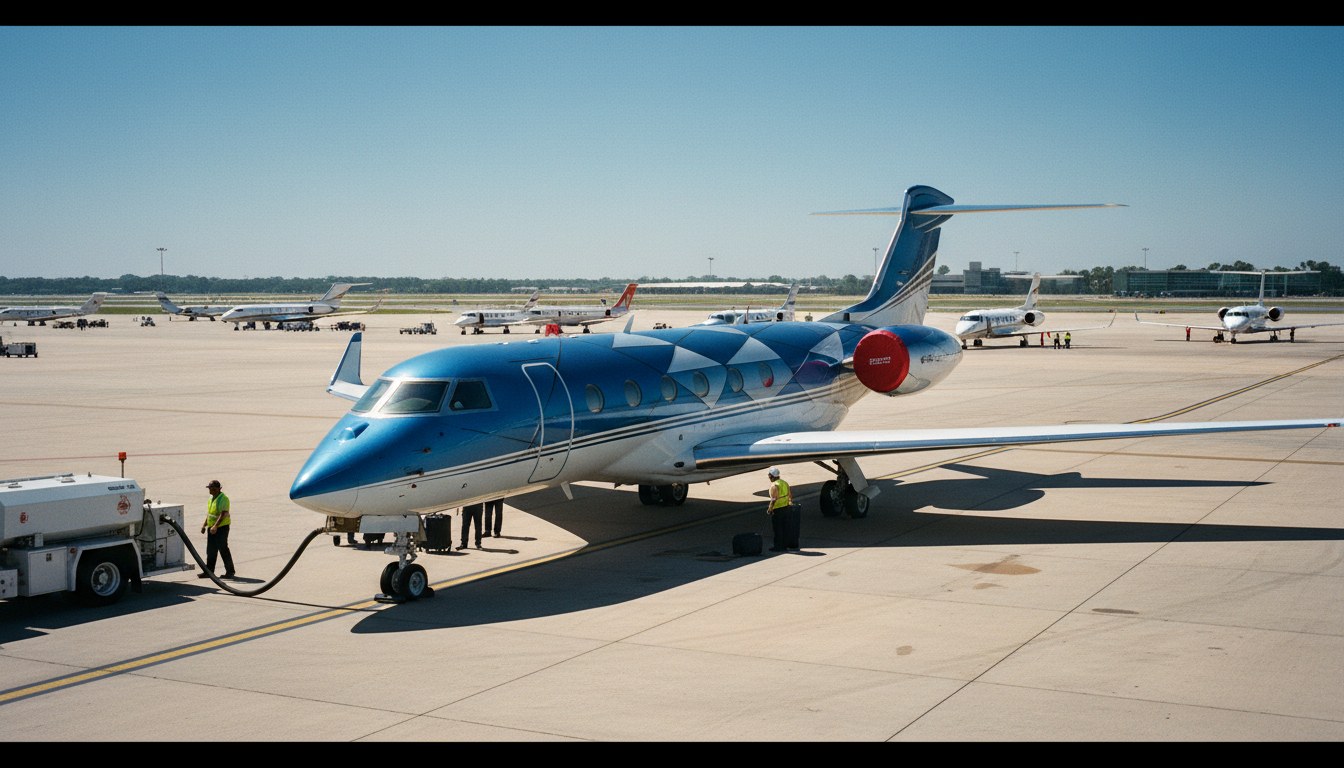
VistaJet's fleet utilization hit 87% in 2024, up from 71% five years earlier. That seventeen-point jump isn't luck—it's the death of inefficiency.
The charter world's dirty secret is that empty legs were always a sign of poor planning. Those half-price flights from Teterboro to Miami existed because someone screwed up the scheduling. Now, algorithmic routing systems are eliminating most repositioning flights before they happen, making true empty legs as rare as a Concorde sighting.
Flexjet's proprietary software now builds multi-leg itineraries that chain customer trips together with surgical precision. A G650 that drops passengers in Aspen doesn't deadhead back to White Plains—it picks up another charter to Denver, then connects to a third client heading to Chicago. The aircraft traces an efficient path across the continent instead of ping-ponging between bases.
"We're seeing 40% fewer empty legs than we did in 2019," says a senior charter broker who requested anonymity. "The algorithms are just too good now. They're optimizing routes three, four legs ahead."
This isn't just about saving fuel costs—though repositioning a Global 7500 burns roughly $8,000 in jet-A per hour. It's about maximizing revenue from assets that cost $75 million and depreciate whether they're flying or sitting on the ramp. Every empty hour is lost money.
The shift has transformed how operators think about fleet deployment. Instead of parking aircraft at convenient bases and hoping for nearby demand, they're treating their jets like pieces on a chess board, always thinking several moves ahead. A Citation X might start Monday in Los Angeles, work its way through Phoenix and Dallas by Wednesday, then finish the week in Atlanta—all with paying passengers aboard.
Manhattan Jet Charter's empty leg inventory has shrunk 60% since 2020. Where they once listed dozens of discounted flights each week, now they might have five or six legitimate empties. The remainder are what insiders call "ghost legs"—marketing vehicles priced just below retail to create the illusion of deals.
Real empty legs still exist, but they're increasingly the result of genuine surprises: weather cancellations that break carefully planned chains, maintenance issues that ground aircraft mid-route, or last-minute client changes. These legitimate repositioning flights often disappear within hours of being posted, snapped up by brokers or sold directly to operators' best clients.
The irony is perfect. Charter customers spent decades complaining about empty leg availability and pricing. Now that operators have solved the underlying problem—wasteful aircraft positioning—those same customers are mourning the loss of discounted flights. You can't have efficiency and waste simultaneously.
For operators, this evolution represents maturation from a cottage industry into a data-driven business. The days of gut-feel scheduling and seat-of-the-pants logistics are ending. In their place: predictive analytics, machine learning, and ruthless optimization.
The empty leg isn't dead—it's just no longer empty by accident.
Sources
References used in this article
- Aviation International NewsCharter industry fleet utilization trends
- Business Aviation InsiderEmpty leg market analysis 2019-2024
- VistaJetFleet operations and efficiency metrics
- FlexjetRouting optimization technology