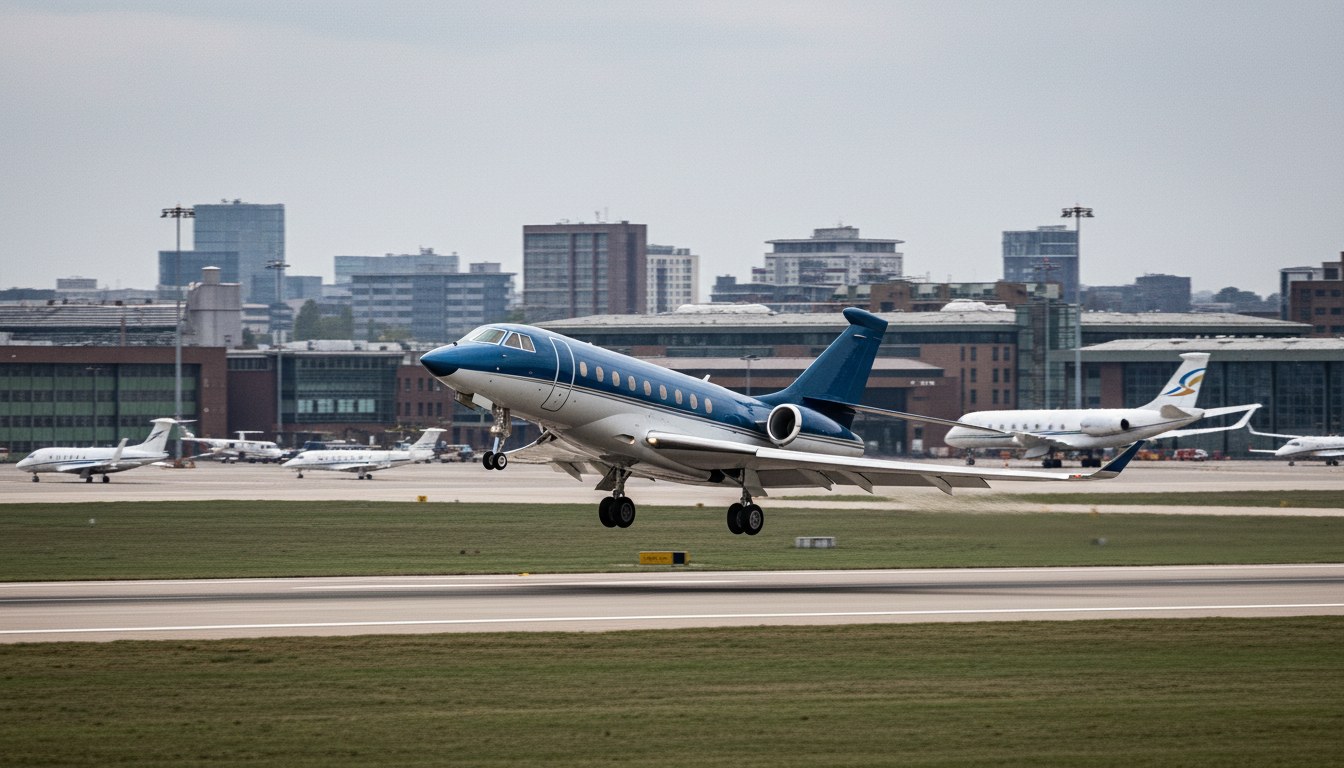
Walk into any major European FBO and count the tail numbers. You'll find Dassault Falcons outnumbering Gulfstreams nearly three to one, a statistic that would seem impossible given Gulfstream's global market leadership.
The European Business Aviation Association's latest fleet census reveals the stark reality: 68% of super-midsize and large-cabin jets operating European routes are Dassault aircraft. This isn't patriotic preference—it's operational necessity.
Europe's aviation infrastructure tells the story. London City Airport's 4,948-foot runway eliminates most large-cabin competition. So does Samedan's 5,905 feet in the Swiss Alps, or Cannes' 6,890 feet on the Riviera. These aren't outliers—they represent hundreds of European airports where business aviation thrives but American iron cannot.
Dassault designed the Falcon 7X and 8X specifically for these constraints. Both jets can operate from 5,000-foot runways while carrying eight passengers 5,950 nautical miles—a capability no Gulfstream or Global Express can match. The 7X lands at 2,500 feet per minute descent rates that would make a G650 pilot nervous, thanks to its distinctive tri-jet configuration and advanced flight controls.
Then there's the service network. Dassault operates 14 factory service centers across Europe, from Bordeaux to Moscow. Gulfstream maintains just four European facilities. When your $60 million aircraft needs maintenance in Prague or Athens, that network density matters more than cabin width.
The operational advantages compound. Falcon pilots train on European approaches from day one—the steep descents into Lugano, the noise-abatement procedures over Swiss villages, the complex airspace around Frankfurt. American manufacturers offer European training, but it's supplemental. For Dassault, it's foundational.
Consider a typical European executive's mission profile: Paris Le Bourget to London City, then on to Zurich before returning to Milan Linate. Every leg involves airports with performance constraints that favor the Falcon design philosophy. The 8X completes this circuit with fuel to spare. A G650ER might manage it, but with reduced payload and no margin for weather diversions.
Gulfstream's response has been the G700, with impressive short-field capabilities for its size. But physics remain unforgiving. At maximum takeoff weight, the G700 needs 6,250 feet—still 1,250 feet more than the 8X requires for the same mission.
The market has spoken through wallet votes. European charter operators choose Falcons not for Gallic charm, but for schedule reliability. When weather closes primary airports, Falcons reach alternates that strand larger aircraft. That operational flexibility translates directly to revenue.
American manufacturers excel in trans-oceanic missions where runway length isn't constrained. But Europe's dense network of challenging airports rewards the French approach: engineering for constraints rather than maximum performance. Until infrastructure changes—which it won't—Dassault's European dominance reflects not national preference, but aerodynamic reality.
Sources
References used in this article
- European Business Aviation AssociationAnnual fleet census data
- Dassault AviationFalcon performance specifications and service network
- Airport Data OrganizationEuropean airport runway length database
- Business Aviation MagazineEuropean market analysis and operator surveys